Synthetic grass vs hard court: which surface should you play on?
A coach's take on how each surface treats your body and your game, and why beginners, juniors and older players should start on synthetic grass.
Quick answer
- Start on synthetic grass. It absorbs more impact, so you're less sore after a hard session.
- Hard court is faster: timing is harder, and reaction time and agility have to keep up.
- Twisting, turning and pivoting at speed on hard court loads the muscles more aggressively, so expect more soreness.
- Good biomechanics and movement patterns reduce that load on the joints.
- Moving into competition? Switch to hard court. Many comps are played on hard courts, and overseas a lot is on clay.
Synthetic grass: softer on the body
Synthetic grass gives a much softer response. It absorbs more of the impact, so after an intense session you don't carry as much soreness, because there isn't the same direct, heavy impact you get on a hard court.
That's why I put beginners, juniors and older players on synthetic grass first. They can build volume and confidence without their joints taking a beating.
Hard court: a faster, harder game to develop
On a hard court the ball comes through faster. Timing is harder, your reaction time has to be quicker, and your agility has to match it.
If you're playing at a high-performance pace, all the twisting, turning and quick pivoting engages the muscles much more aggressively. You'll feel a lot more sore after the session.
Movement is what protects your joints
The surface isn't the whole story. With the correct biomechanics and movement patterns, soreness around the joints drops a lot, because the load goes through the big muscle groups that should be doing the work rather than the joints.
That's a big part of what I work on with players before moving them to faster surfaces.
Which surface for which player
| Player | Start on | Why |
|---|---|---|
| Beginner | Synthetic grass | Softer on the body, slower ball, easier timing |
| Junior | Synthetic grass | Builds volume without heavy impact |
| Older player | Synthetic grass | Less joint load, less soreness |
| Going competitive | Hard court | Many competitions are on hard courts |
| Playing overseas | Add clay | Much of the overseas game is on clay |
Where to find each surface in the East
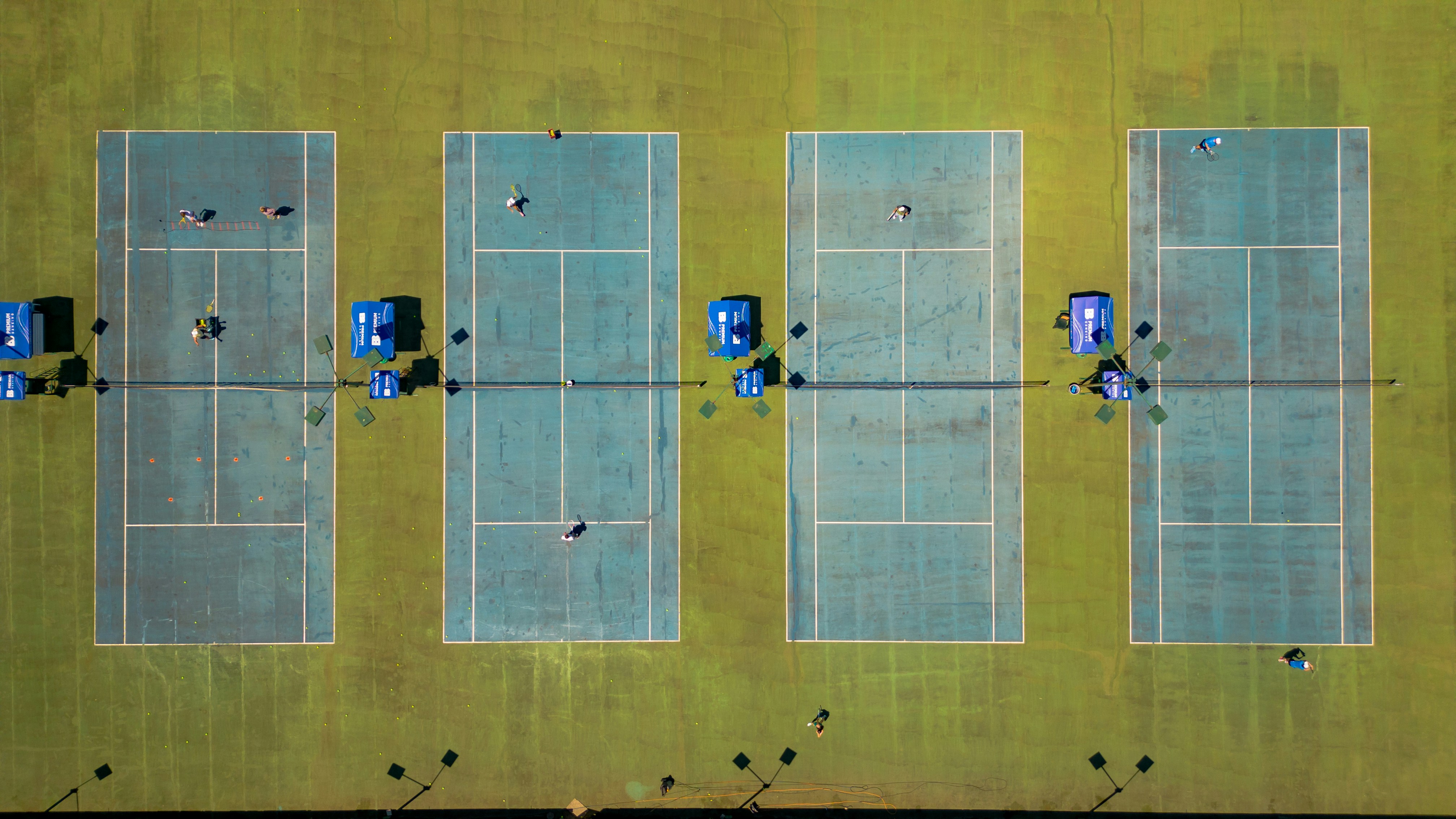
- Synthetic grass only: Bondi, Coogee Beach Tennis, Cooper Park, Lyne Park, Rushcutters Bay, Trumper Park.
- Both synthetic and hard: Latham Park, Snape Park, Heffron Park, Mutch Park.
- Hard only: Sydney Boys High School and Prince Alfred Park (both Plexicushion, the Australian Open-style surface).
- Clay: Eastside Tennis Centre, one of the only clay options in the Eastern Suburbs.
Common questions
Is synthetic grass or hard court better for beginners?
Synthetic grass. It absorbs more impact, the ball is slower and timing is easier, so beginners, juniors and older players are less sore and build confidence faster.
Why am I more sore after playing on hard court?
Hard courts don't absorb impact, and twisting, turning and pivoting at speed engages the muscles more aggressively. Good biomechanics and movement patterns reduce the load on your joints.
When should I move from synthetic grass to hard court?
When you're enjoying the sport and want to play competitively. Many competitions are played on hard courts, so you need time on that surface to adjust to the faster ball.
Ask Bastien on WhatsApp which surface suits your game →